If you were 22 years old today would you get past your own hiring process?
You would be armed with your degree, enthusiasm and whatever digital footprint you had accumulated by that age. Where would your qualifications, CV and work experience references get you?
I’m talking about the hiring process that exists right now, in your organisation, overseen by people like you.
The conditions facing young professionals entering the workforce today are very different from anything most HR and L&D leaders experienced at the same stage.
Entry-level jobs are down, graduate unemployment is rising. The tasks that traditionally served as the first rungs are being automated.
Meanwhile, expectations placed on candidates have expanded considerably. A LinkedIn profile is no longer optional. A curated digital presence is increasingly assumed. The same applies to the ability to articulate not just what you studied but what you created or contributed along the way.
The people setting those expectations came of age in a very different environment. They did not have to manage a personal brand at 21 (or knew what it was). They were not screened on social media before their first interview. They did not need to demonstrate thought leadership before they had any thoughts worth leading on.
This does not make those expectations wrong, but it does make them worth examining.
The people responsible for hiring decisions need to understand the environment their candidates are navigating and put themselves in their shoes.
So how best to respond?
And how might it impact upon the decisions that you take?
Here are four aspects to consider.
TL;DR
The standards now applied to entry-level candidates such as digital presence, personal brand, AI literacy or pre-employment networking did not exist when most hiring managers were starting out. If you struggle to imagine passing your own process at 22, that is not nostalgia. Good hiring decisions depend on understanding the landscape your candidates are actually navigating, not the one you navigated decades ago.
1. Your digital footprint might not pass your own screening
Digital screening is a common part of today’s hiring processes, generally before inviting a candidate to interview. Research indicates that over 90% of HR professionals find a candidate’s LinkedIn profile at least somewhat helpful in the hiring process, and a growing number use AI tools to review social media as part of applicant assessment.
There are around fifteen images of me at university, and thirteen were taken on the same evening in the small hours. I’m delighted about the lack of digital footprint from that time.
So if a recruiter searched your name today and found only what existed when you were in your early twenties, would it reflect well on you?
For most people who graduated before the mid 2000s, the answer is that there would be almost nothing to find. No LinkedIn profile, no published articles, no evidence of professional curiosity. By today’s standards, that absence is itself a red flag.
Young professionals in 2026 are expected to have a coherent, professional online presence before they have held a full-time role. They are expected to have managed their privacy settings thoughtfully, and ensured their online behaviour aligns with their professional aspirations.
This is a genuinely new skill set. It turns out that you always needed to be on (or at least give the impression that you were).
When you screen a candidate on the basis of their digital presence, it is worth acknowledging that you are applying a standard that simply did not exist when you were in their position.
Suggestions
Search your own name as a recruiter would and compare what you find to what you expect of candidates.
Document what your digital screening criteria actually are, and share them with candidates before the process begins.
Audit whether your screening process would have identified you at 22 and decide whether that is a feature or a flaw.
2. The entry-level jobs you started in no longer exist
Many senior professionals built their early careers on roles that are now being automated out of existence. Filing, scheduling, basic data processing, first line customer queries were not glamorous, but they gave people a way in. They were first proper jobs, summer jobs, Saturday jobs.
What you learned from them was not how best to manage a filing cabinet but how to learn from small mistakes, operate in a multigenerational workplace, develop workplace habits and build credibility before being trusted with more.
AI is now performing many of those tasks faster, cheaper, and without the need for supervision or development time. The result is that the traditional entry-level ladder has had several rungs removed. Young professionals are being asked to start higher up, with less scaffolding, and with fewer opportunities to prove themselves incrementally.
Organisations’ ideal candidates have evidence for their high competence, but the roles that used to build that competence no longer exist in the same volume. It is a structural problem for individual graduates to solve. If you built your career on a role that has since been automated, what would you do differently today?
The answer is probably that you would need to be considerably more creative and proactive than your circumstances required you to be.
Suggestions
Map which entry-level roles in your organisation have been reduced or removed in the last five years.
Identify what developmental value those roles provided and consider how to replace it deliberately.
Design graduate schemes that provide genuine scaffolding, not just the expectation of readiness on arrival.
3. Networking used to be optional.
When many of today’s HR and L&D leaders were starting out, networking was something you did at industry events once you were already established. It was not for early entry roles, let alone in advance of them.
You built your network over time, through shared workplaces, mutual colleagues, and professional associations you joined after you had something to offer. It was largely reactive and spontaneous.
Career experts now advise graduates to build strategic professional relationships before they even apply for roles. ‘You just applied without building trust through LinkedIn over several months?? Then what did you expect?!’.
Thoughtful connections made ahead of an application can signal genuine motivation and a desire to learn beyond what a CV can convey. In practice, this means young professionals are expected to identify relevant people in their target sectors, reach out proactively, engage meaningfully on professional platforms and sustain relationships that may not yield results for months or years.
This is sophisticated relationship management. It requires emotional intelligence, strategic thinking and a degree of professional confidence that takes most people years of working life to develop. Young professionals do it too and are genuinely impressive with it.
But it is worth acknowledging that you were not asked to do this at their age, and that many people who would have been excellent employees never had to demonstrate this particular skill to get through the door.
Suggestions:
Consider whether networking capability is a good predictor of job performance in your specific roles.
Distinguish between candidates who networked effectively and candidates who had access to the right networks. Not the same thing.
Consider whether you are filtering for capability or for familiarity with how the game works.
4. Personal branding is now a prerequisite
There was a time when having a strong personal brand as a young professional set you apart. Today, it is closer to a baseline expectation, particularly in the most competitive sectors.
Candidates are advised to build a visible professional identity before they enter the workforce: to write, post, comment, contribute to industry conversations as someone with a perspective worth listening to.
Employers want to see how you think, not just what you have done. In reality, a student working two part-time jobs to fund their degree has considerably less capacity to grow a LinkedIn following or maintain a professional blog than one who does not face those pressures.
Personal branding also rewards extroversion, fluency in digital communication norms and a willingness to make your thinking public. I led inner-city comprehensive schools, and one perpetual challenge was developing confidence in those young people that they had something to say.
Declaring yourself to be a thought leader correlates with the opportunities gained by those from particular socioeconomic and educational backgrounds more than raw professional potential.
If you are using the presence or absence of a personal brand as a hiring signal, it is worth being explicit about what you believe it actually predicts. Visibility is not the same as capability.
How confident would you have felt about being so visible at 22?
Practical steps:
Interrogate whether personal brand presence actually predicts performance in your roles, or whether it is a proxy for confidence and access.
Create alternative ways for candidates to demonstrate their thinking if they lack a public profile.
Consider whether your criteria systematically disadvantage candidates from less privileged backgrounds.
The best candidate for your job may be the one you have heard least about.
Remember that
The standards you apply to candidates today did not exist when you were in their position. Digital presence, personal branding, AI literacy and pre-employment networking have not been around for decades. Expecting mastery of them from people just starting out is a significant ask. You didn’t have to face that.
The absence of impressive looking experience is not the same as the absence of potential. The candidates who had the fewest structured opportunities and still found ways to build skills, demonstrate initiative and show up prepared may be precisely the people your organisation most needs.
Your hiring criteria are not neutral. They might reflect the world as it looked when the people who designed them were building their own careers.
The empathy gap in hiring has a cost. When the people responsible for bringing talent into an organisation do not understand the environment those candidates are operating in, they will not make the best decisions.
The best hiring leaders stay genuinely curious about what it is like to be on the other side of the process. Is that still you?
Frequently asked questions
1. Why should I audit my hiring process if it is already producing good results?
Are they? ‘Good results’ is a relative measure. If your process consistently produces people who resemble your existing workforce, it may be performing well against its own criteria while missing a significant part of the available talent pool. Your hires may be capable and look confident, but were they necessarily the best?
2. Is it realistic to expect hiring managers to understand what the graduate job market feels like right now?
Yes, and it is not as difficult as it sounds. It does not require hiring managers to experience the market themselves, but it requires them to be curious about it. Read some data, talk to recent graduates already in your organisation, go to a university careers fair. Put yourself in their shoes.
3. Does this topic apply only to graduate hiring, or is it relevant to more experienced roles too?
It is most acute in graduate hiring, but the underlying question applies more broadly. Any time a hiring process was designed by people who came of age in a different labour market, there is a risk that the criteria reflect a past version of what a strong candidate looks like.
About Alex Atherton
Alex Atherton is a Gen Z speaker and generations expert who helps organisations navigate multigenerational workplace challenges. Author of The Snowflake Myth, he specialises in Gen Z recruitment and retention and leadership development.
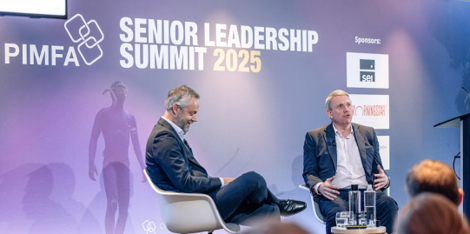
Alex at PIMFA Senior Leadership Summit
How can I help you?
Talks, workshops and seminars — I am an award-winning speaker. My talks include recruiting and retaining Gen Z, understanding Gen Z, overcoming the challenges of the multigenerational workplace plus those relevant to the topics below. Speaker showreel: https://vimeo.com/1076369842/b768ca16c6
My book The Snowflake Myth is out now — to receive a free chapter please visit https://www.alexatherton.com/snowflake-myth
One-to-one coaching programmes for senior leaders — https://www.alexatherton.com/coaching
Team coaching programmes — working IN a team is not the same as working AS a team and yet they are often treated as if they are the same. I help teams move from the former to the latter, and generate huge shifts in productivity and outcomes. https://www.alexatherton.com/teams